

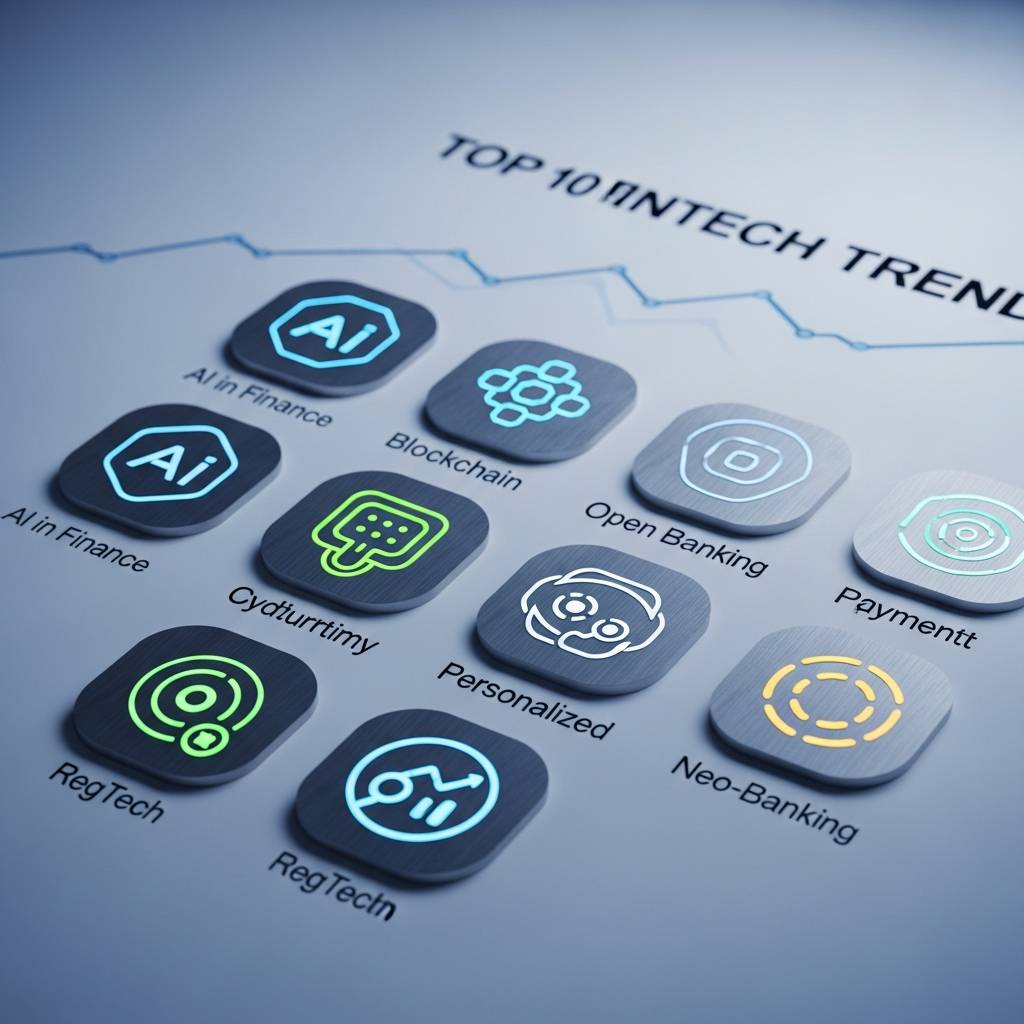
Top 10 Fintech Trends: Uncover Amazing Growth
The financial technology landscape is a rapidly evolving arena, constantly reshaping how we manage, invest, and interact with money. From revolutionary payment systems to sophisticated AI-driven advisory services, the pace of innovation is breathtaking. Understanding the most impactful **Fintech Trends** is no longer just for industry insiders; it’s essential for consumers, businesses, and investors looking to navigate the future of finance and uncover amazing growth opportunities. This comprehensive guide delves into the top 10 **Fintech Trends** that are currently driving transformation and poised to dominate the financial world in the coming years.
The digital revolution has fundamentally altered consumer expectations, pushing financial institutions to innovate or risk obsolescence. These emerging **Fintech Trends** are not just incremental improvements; they represent paradigm shifts in how financial services are delivered, consumed, and regulated. By exploring these key areas, we can better appreciate the immense potential and challenges that lie ahead.
Understanding the Shifting Landscape of Fintech Trends
The global fintech market is projected to grow significantly, demonstrating the vast potential within this sector. Keeping abreast of the latest **Fintech Trends** is crucial for businesses aiming to remain competitive and relevant. These trends reflect a broader movement towards greater efficiency, accessibility, and personalization in financial services.
From blockchain’s distributed ledger technology to the seamless integration of finance into everyday applications, the innovation cycle is accelerating. This section will explore the leading **Fintech Trends** that are defining the industry’s present and future.
1. Artificial Intelligence (AI) and Machine Learning (ML) in Finance
AI and ML are at the forefront of the most significant **Fintech Trends**, revolutionizing nearly every aspect of financial services. These technologies enable sophisticated data analysis, predictive modeling, and automated decision-making. Banks and fintech companies are leveraging AI to enhance customer service, detect fraud, and personalize financial products.
For instance, AI-powered chatbots provide instant customer support, handling inquiries and guiding users through complex financial processes. ML algorithms analyze vast datasets to identify fraudulent transactions in real-time, significantly improving security measures. This intelligent automation is streamlining operations and reducing costs across the board. (Image: A graphic representing AI algorithms analyzing financial data. Alt text: AI in Fintech Trends)
2. Embedded Finance: Seamless Integration
Embedded finance is one of the most exciting **Fintech Trends**, characterized by the seamless integration of financial services into non-financial platforms. This means consumers can access lending, insurance, or payment options directly within the apps or websites they already use for other purposes. Think of buying a car online and being offered financing options at the point of sale, without ever leaving the dealer’s website.
This trend blurs the lines between financial and non-financial companies, creating new revenue streams and enhancing customer convenience. It’s about bringing finance to where the customer is, rather than requiring them to seek out traditional financial institutions. This approach significantly reduces friction in the customer journey and is rapidly gaining traction.
3. Decentralized Finance (DeFi) and Web3
DeFi is a revolutionary concept built on blockchain technology, aiming to create an open, transparent, and permissionless financial system. It utilizes smart contracts to automate financial agreements, removing the need for intermediaries like banks. This is a core component of the broader Web3 movement, which envisions a decentralized internet.
Key applications within DeFi include lending protocols, decentralized exchanges (DEXs), and stablecoins. While still in its early stages and subject to regulatory scrutiny, DeFi represents a powerful potential shift in how financial services are structured and accessed globally. It offers opportunities for greater financial inclusion and innovation, making it a critical area within **Fintech Trends** to watch.
4. Open Banking and API-Driven Innovation
Open Banking is a regulatory framework that mandates banks to securely share customer financial data with third-party providers, with customer consent. This is facilitated through Application Programming Interfaces (APIs), which act as digital bridges between different systems. This environment fosters innovation by allowing fintech companies to build new services on top of existing banking infrastructure.
This trend has led to the proliferation of personal finance management tools, account aggregation services, and more competitive lending products. The ability to securely access and utilize customer data opens up a world of possibilities for hyper-personalized financial solutions. Open Banking is fundamentally reshaping how financial data is accessed and leveraged, propelling many other **Fintech Trends** forward.
5. Blockchain Technology Beyond Cryptocurrencies
While often associated with cryptocurrencies, blockchain’s potential extends far beyond digital currencies. Its decentralized, immutable ledger technology offers significant advantages for various financial applications. This includes improving the efficiency and transparency of cross-border payments, supply chain finance, and securities trading.
For example, blockchain can reduce settlement times for transactions from days to mere minutes, significantly cutting costs and operational complexities. It also enhances security and auditability, making it attractive for regulatory compliance and fraud prevention. The exploration of blockchain for central bank digital currencies (CBDCs) is another significant development in this space, highlighting its diverse applications among current **Fintech Trends**.
6. Hyper-Personalization and Enhanced Customer Experience
In an increasingly competitive market, delivering a highly personalized customer experience is paramount. Fintech companies are leveraging data analytics, AI, and behavioral economics to offer bespoke financial products and advice. This goes beyond simple product recommendations; it involves understanding individual financial habits, goals, and risk tolerances to provide tailored solutions.
Neobanks, for instance, excel at offering intuitive mobile apps, instant notifications, and personalized budgeting tools. This focus on individual needs creates stronger customer loyalty and satisfaction. The drive for hyper-personalization is a direct response to consumer demand for convenience and relevance, making it a defining characteristic of modern **Fintech Trends**.
7. RegTech: Regulatory Technology and Compliance Automation
As financial regulations become more complex and stringent, RegTech (Regulatory Technology) is emerging as a vital solution. RegTech utilizes AI, machine learning, and big data analytics to automate and streamline compliance processes. This includes anti-money laundering (AML), know-your-customer (KYC) checks, and fraud detection.
By automating these tasks, financial institutions can reduce human error, cut operational costs, and significantly improve the speed and accuracy of compliance. This not only helps avoid hefty fines but also frees up valuable resources to focus on innovation. RegTech is a powerful enabler, allowing fintech companies to scale while maintaining regulatory adherence, and is therefore a crucial aspect of prevailing **Fintech Trends**.
8. Sustainable and Green Fintech (ESG)
Environmental, Social, and Governance (ESG) considerations are increasingly influencing investment decisions and corporate strategies. Sustainable fintech, or Green Fintech, leverages technology to promote environmentally friendly and socially responsible financial practices. This includes platforms for green investments, carbon footprint tracking, and impact investing.
Consumers are becoming more conscious of their financial impact, and fintech is responding by offering tools that align investments with personal values. This trend is driving innovation in areas like sustainable lending, green bonds, and platforms that facilitate transparent impact reporting. The integration of ESG factors into financial products is a growing area within **Fintech Trends**, reflecting broader societal shifts.
9. Enhanced Cybersecurity and Fraud Prevention
With the increasing digitalization of financial services, cybersecurity remains a top priority. Fintech innovations are constantly battling sophisticated cyber threats and fraud attempts. Advanced encryption, biometric authentication, and AI-driven anomaly detection are critical tools in this ongoing fight.
Multi-factor authentication (MFA) and behavioral biometrics (analyzing how a user interacts with a device) are becoming standard security measures. Companies are investing heavily in robust cybersecurity infrastructures to protect sensitive financial data and maintain customer trust. The continuous evolution of security measures is a foundational element among the critical **Fintech Trends**.
10. Financial Inclusion and Neobanks
Financial inclusion, the effort to provide accessible and affordable financial services to underserved populations, is a powerful driver of **Fintech Trends**. Neobanks, or challenger banks, are digital-only banks that operate without physical branches, offering lower fees, user-friendly mobile apps, and faster services. They are particularly adept at reaching populations traditionally ignored by incumbent banks.
These digital banks often cater to specific niches, such as freelancers, immigrants, or small businesses, providing tailored financial solutions. Their agile, technology-first approach allows them to innovate rapidly and offer services that truly meet the needs of diverse customer segments. The rise of neobanks is democratizing access to financial services globally.
The Future Impact of These Fintech Trends
The convergence of these **Fintech Trends** promises a future where financial services are more integrated, intelligent, and accessible than ever before. We are moving towards a financial ecosystem that is not only more efficient but also more responsive to individual and societal needs. The rapid adoption of these technologies underscores their transformative potential.
Consider the interplay between AI, Open Banking, and embedded finance. AI can analyze data obtained via Open Banking APIs to offer highly personalized financial products directly at the point of need through embedded finance solutions. This interconnectedness is a hallmark of the evolving fintech landscape.
Navigating the Next Wave of Fintech Trends
Staying informed about these developments is critical for anyone involved in the financial sector or simply managing their personal finances. The speed at which these **Fintech Trends** are developing means that continuous learning and adaptation are essential. Businesses that embrace these innovations will be better positioned for growth and sustained success. (Image: A stylized graph showing upward growth in fintech innovation. Alt text: Growth in Fintech Trends)
The regulatory environment is also striving to keep pace with these technological advancements. Governments and financial authorities worldwide are working to create frameworks that foster innovation while protecting consumers and maintaining financial stability. This balance is crucial for the healthy development of all **Fintech Trends**.
Conclusion: Seizing Opportunities in Fintech Trends
The financial world is undergoing an unprecedented transformation, driven by the powerful forces of technology and innovation. The top 10 **Fintech Trends** discussed here – from AI and embedded finance to DeFi and sustainable fintech – are not just fleeting fads but fundamental shifts that will reshape our economic future. They offer immense opportunities for businesses to innovate, for consumers to gain better control over their finances, and for the financially underserved to access vital services.
Embracing these **Fintech Trends** is paramount for staying competitive and relevant in an increasingly digital world. The journey ahead promises continued disruption, but also unparalleled potential for growth and positive change. Don’t be left behind. Explore how these **Fintech Trends** can benefit your financial strategies or business model today.
Ready to dive deeper into the future of finance? Learn more about specific fintech innovations or consult expert reports to gain further insights. Share your thoughts on these groundbreaking developments and consider how you can leverage them for amazing growth!