

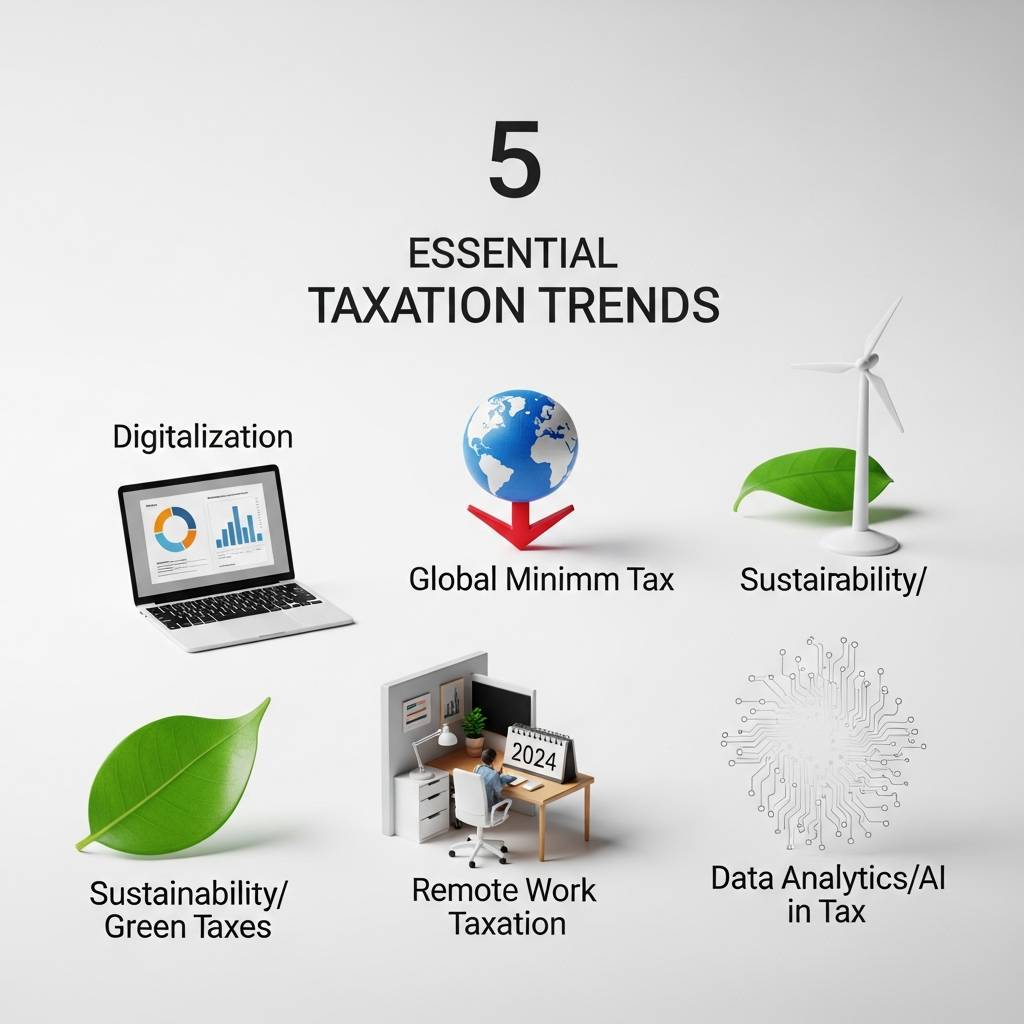
The global economic landscape is in constant flux, and with it, the world of taxation. For businesses, individuals, and policymakers alike, understanding the evolving **Taxation Trends** is not just an advantage—it’s a necessity. As we move further into 2024, several significant shifts are reshaping how taxes are levied, collected, and managed worldwide. These changes are driven by technological advancements, geopolitical shifts, environmental concerns, and a persistent push for greater equity and transparency. Staying informed about these crucial developments can help you navigate complexities, plan strategically, and ensure compliance in an increasingly intricate financial environment. Let’s delve into five essential taxation trends that demand your attention this year.
The Rise of Global Minimum Taxation: A Key Taxation Trend
One of the most transformative **Taxation Trends** is the global push for a minimum corporate tax rate. Spearheaded by the Organisation for Economic Co-operation and Development (OECD) through its Inclusive Framework on Base Erosion and Profit Shifting (BEPS) 2.0, this initiative aims to curb tax avoidance by multinational enterprises (MNEs). The goal is to ensure that large corporations pay a fair share of tax wherever they operate, reducing the incentive for profit shifting to low-tax jurisdictions. This shift marks a significant departure from decades of international tax competition.
Pillar One and Pillar Two: Shaping Future Taxation Trends
The BEPS 2.0 project is primarily divided into two pillars. Pillar One focuses on reallocating taxing rights to market jurisdictions, meaning that MNEs will pay tax in countries where their customers are located, even if they don’t have a physical presence there. This is particularly relevant for digital companies. Pillar Two, on the other hand, introduces a global minimum corporate tax rate of 15% for large MNEs. This minimum rate applies to companies with revenues above €750 million, ensuring that their effective tax rate doesn’t fall below this threshold in any country they operate. The implementation of these pillars is progressing, with many countries already enacting or preparing legislation. For instance, the European Union has adopted a directive to implement Pillar Two, and numerous individual nations are following suit. Businesses need to meticulously track these legislative developments, as they will significantly impact their global tax liabilities and compliance obligations.
The implications of Pillar Two are profound. MNEs must now meticulously track their effective tax rates in every jurisdiction, as top-up taxes may be levied if the effective rate falls below 15%. This requires sophisticated data collection and reporting mechanisms, often demanding significant investment in tax technology solutions. The complexity of calculating and applying these rules across diverse legal and accounting frameworks presents a substantial challenge. Companies that fail to adapt their tax planning and reporting strategies risk facing significant penalties and increased scrutiny. This complex regulatory environment underscores the importance of proactive engagement with tax advisors who specialize in international tax law, allowing businesses to adapt to these new global **Taxation Trends** effectively.
Digital Transformation: A Pivotal Taxation Trend
The accelerated pace of digital transformation continues to redefine various sectors, and tax administration is no exception. Governments worldwide are increasingly leveraging advanced technologies like artificial intelligence (AI), machine learning (ML), and blockchain to enhance tax collection, improve compliance, and combat fraud. This digitalization is making tax systems more efficient, transparent, and responsive, but it also introduces new challenges for taxpayers.
AI and Automation: Revolutionizing Taxation Trends
AI and automation are at the forefront of this digital revolution in taxation. Tax authorities are deploying AI-powered analytics to identify discrepancies, detect fraud patterns, and streamline audit processes. For example, machine learning algorithms can analyze vast datasets of financial transactions, cross-referencing information from various sources to flag potential non-compliance with remarkable accuracy. This proactive approach allows tax agencies to focus their resources more effectively, moving away from traditional, random audits towards targeted investigations. This shift is a critical component of modern **Taxation Trends**.
From the taxpayer’s perspective, automation is also transforming compliance. Many jurisdictions are moving towards e-invoicing mandates, digital tax filings, and real-time reporting requirements. This means businesses need robust accounting and enterprise resource planning (ERP) systems capable of integrating seamlessly with tax authorities’ digital platforms. For instance, countries like Italy have made e-invoicing mandatory for most transactions, significantly reducing manual errors and increasing transparency. The adoption of such technologies not only speeds up the filing process but also reduces the administrative burden for compliant businesses. However, it also demands a higher degree of data accuracy and system integration, highlighting the need for continuous technological upgrades. Furthermore, the rise of digital currencies and non-fungible tokens (NFTs) presents new frontiers for tax authorities, necessitating new frameworks for their valuation and taxation. The evolving nature of digital assets is a burgeoning area within current **Taxation Trends**.
(Image Alt Text: A digital illustration showing interconnected global networks with data flowing, representing the digitalization of taxation trends and AI’s role in tax administration.)
ESG and Green Taxation: An Emerging Taxation Trend
Environmental, Social, and Governance (ESG) factors are no longer just buzzwords; they are increasingly influencing tax policy decisions globally. As governments intensify their efforts to combat climate change and promote sustainable development, green taxation is emerging as a significant **Taxation Trend**. This involves using tax mechanisms to incentivize environmentally friendly behaviors and penalize activities that harm the planet.
Carbon Taxes and Sustainability Incentives
Carbon taxes are a prime example of green taxation. These taxes are levied on greenhouse gas emissions, making pollution more expensive and encouraging businesses and consumers to reduce their carbon footprint. Many countries, including Canada and Sweden, have implemented carbon pricing mechanisms, with varying rates and scopes. The European Union’s Carbon Border Adjustment Mechanism (CBAM) is another groundbreaking initiative, aiming to impose a carbon levy on certain imported goods to prevent carbon leakage and encourage global climate action. This mechanism will significantly impact international trade and supply chains, forcing businesses to re-evaluate their production processes and sourcing strategies.
Beyond direct carbon taxes, governments are also introducing a range of tax incentives for sustainable practices. These can include tax credits for investing in renewable energy, deductions for energy-efficient upgrades, and reduced VAT rates for green products. For example, some jurisdictions offer tax breaks for companies adopting electric vehicle fleets or investing in sustainable agriculture. Conversely, taxes on plastic packaging, single-use items, and other environmentally detrimental products are also gaining traction. These measures are designed to steer economic activity towards more sustainable models, reflecting a broader societal commitment to environmental protection. Companies that proactively integrate ESG considerations into their business models and actively pursue green initiatives may find themselves eligible for significant tax advantages, underscoring the strategic importance of aligning with these environmental **Taxation Trends**.
The increasing focus on ESG also means that tax transparency and corporate responsibility are under greater scrutiny. Stakeholders, including investors and consumers, are demanding more information about how companies manage their tax affairs and contribute to broader societal goals. This pressure can lead to reputational risks for companies perceived as not paying their fair share or engaging in aggressive tax planning. Consequently, businesses are finding it beneficial to demonstrate their commitment to ethical tax practices as part of their overall ESG strategy, a growing expectation within the latest **Taxation Trends**.
Shifting Focus to Wealth Taxation: A Growing Taxation Trend
In the wake of widening wealth inequality and the economic strains exacerbated by global crises, there is a renewed global discussion around taxing wealth and high-net-worth individuals (HNWIs) more aggressively. This **Taxation Trend** reflects a broader societal and political movement towards ensuring that the wealthiest segments of society contribute more to public finances.
Capital Gains and Inheritance: Key Areas of Taxation Trends
While outright wealth taxes (annual taxes on net assets) have been implemented in only a few countries and often face significant practical challenges, governments are exploring other avenues to increase the tax burden on the wealthy. One common approach is to raise capital gains taxes. Capital gains, which are profits from the sale of assets like stocks, real estate, or businesses, are often taxed at lower rates than ordinary income. Proposals to align capital gains tax rates more closely with income tax rates are frequently debated in many jurisdictions. For instance, the Biden administration in the US has repeatedly proposed increasing capital gains taxes for high earners, signaling a shift in policy direction.
Inheritance taxes and estate duties are another area of focus. These taxes are levied on the transfer of wealth upon death. Many countries are reviewing their inheritance tax regimes, considering higher rates, lower exemption thresholds, or broader asset inclusions to generate more revenue and address intergenerational wealth disparities. For example, reforms in the UK have consistently brought inheritance tax into public debate, with discussions around its fairness and effectiveness. These measures aim not only to raise revenue but also to address concerns about economic fairness and opportunity. Understanding these potential shifts is crucial for individuals and families engaged in estate planning and wealth management, as they could significantly impact future financial legacies. The discussion around these forms of taxation represents a significant part of current **Taxation Trends** and public policy debates.
Furthermore, there is an increasing crackdown on tax evasion and aggressive tax planning by HNWIs. International cooperation among tax authorities, facilitated by initiatives like the Common Reporting Standard (CRS), makes it harder for individuals to hide assets offshore. Jurisdictions are sharing more financial information than ever before, leading to greater transparency and reducing opportunities for illicit financial flows. This enhanced scrutiny is a direct response to public demand for greater equity in the tax system and reinforces the idea that all individuals, regardless of their wealth, should contribute their fair share. This vigilance against tax avoidance forms a critical aspect of evolving **Taxation Trends**.
Remote Work’s Impact on Cross-Border Taxation Trends
The global pandemic dramatically accelerated the adoption of remote and hybrid work models, transforming not only how we work but also where. This shift has created unprecedented complexities for cross-border taxation, challenging existing tax frameworks designed for a more traditional, office-centric workforce. The proliferation of remote work is undoubtedly one of the most dynamic **Taxation Trends** for businesses and individuals alike.
Navigating Permanent Establishment and Payroll Issues
For businesses, the primary concern revolves around the concept of “permanent establishment” (PE). A PE typically triggers corporate income tax obligations in a foreign country. With employees working remotely from different jurisdictions, companies face the risk of inadvertently creating a PE in a country where they previously had no taxable presence. This can lead to unexpected corporate tax liabilities and complex compliance requirements. For example, if a senior employee works from their home in a different country, their activities might be deemed sufficient to constitute a PE, subjecting their employer to corporate tax in that country.
Beyond corporate tax, remote work also complicates individual income tax and social security obligations. Employees working remotely from a country other than their employer’s base may become subject to the tax laws of their residence country, potentially creating dual tax residency issues. This necessitates a clear understanding of bilateral tax treaties to avoid double taxation. Additionally, employers must grapple with payroll withholding obligations, social security contributions, and labor law compliance in multiple jurisdictions. Managing these complexities requires robust internal policies, advanced HR and payroll systems, and expert legal and tax advice. The OECD has issued guidance on some of these issues, but definitive solutions are still evolving, making this a challenging area within current **Taxation Trends**. Many companies are still grappling with the full implications, from tracking employee locations to ensuring proper tax remittances. The need for clear internal policies, sophisticated tracking mechanisms, and expert advice on international tax law has never been greater. Companies must actively monitor where their employees are working from and understand the tax implications for both the company and the individual. This proactive approach is essential for mitigating risks associated with this complex and evolving area of **Taxation Trends**.
Conclusion
The world of taxation is undergoing a profound transformation, driven by globalization, technological innovation, environmental imperatives, and shifting socio-economic priorities. From the advent of global minimum taxes and the digitalization of tax administration to the growing emphasis on ESG and wealth taxation, and the complexities introduced by remote work, these five **Taxation Trends** are reshaping the landscape for businesses and individuals alike. Staying informed and proactive is paramount for navigating these changes successfully.
Understanding these developments is crucial for strategic planning, risk management, and ensuring compliance in an increasingly interconnected and regulated world. As governments continue to adapt their tax policies to address modern challenges, a flexible and informed approach will be your greatest asset. Don’t let these changes catch you off guard. We encourage you to consult with tax professionals and leverage authoritative resources, such as those provided by the OECD or national tax authorities, to understand how these trends specifically impact your situation. Proactive engagement with these evolving **Taxation Trends** will not only ensure compliance but also uncover opportunities for optimized financial strategies. Start reviewing your current tax strategies today to align with the future of taxation!