
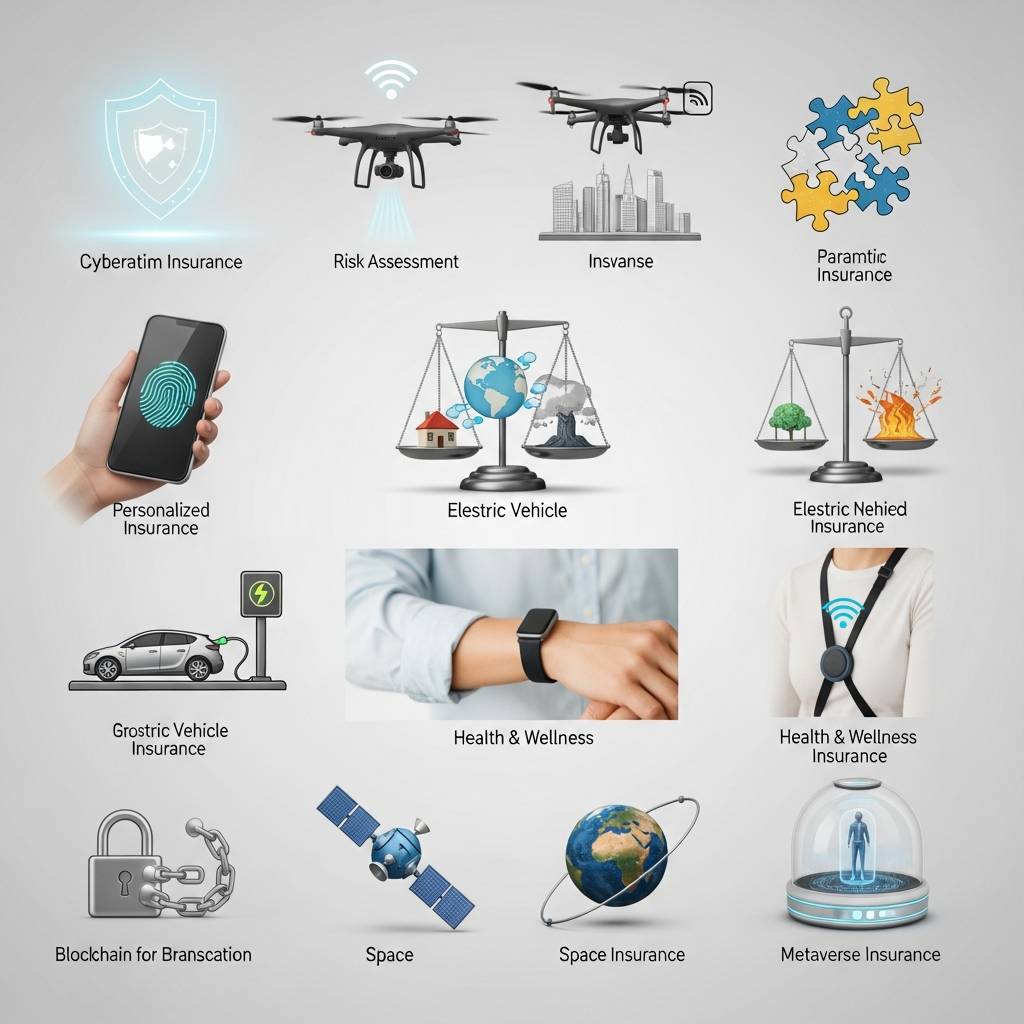
The insurance industry, often perceived as traditional, is currently experiencing a period of unprecedented transformation. Driven by technological advancements, evolving customer expectations, and global shifts, understanding the major forces at play is crucial for insurers, policyholders, and industry stakeholders alike. Staying ahead of the curve means recognizing and adapting to these significant changes.
This comprehensive guide delves into 10 essential Insurance Trends that are reshaping the landscape right now. From artificial intelligence to hyper-personalization, these shifts are not just fleeting fads but fundamental developments that will define the future of insurance for years to come. By exploring these Insurance Trends, you’ll gain valuable insights into where the industry is headed and how it will impact your coverage, risk management, and overall financial well-being.
Understanding the Evolving Insurance Trends Landscape
The world is changing at an accelerated pace, and the insurance sector is no exception. A confluence of factors, including rapid digitization, demographic shifts, and new forms of risk, are compelling insurers to innovate and rethink their traditional business models. These dynamic Insurance Trends demand agility and a forward-thinking approach from all participants.
Key Driving Forces Behind Current Insurance Trends
Several powerful forces are acting as catalysts for the current wave of Insurance Trends. Technology, specifically AI, machine learning, and big data, is perhaps the most prominent driver, enabling new levels of efficiency and personalization. Moreover, heightened customer expectations for seamless digital experiences and transparent interactions are pushing providers to enhance their service delivery. Global events, such as climate change and pandemics, also introduce new risk profiles and regulatory pressures, further influencing these crucial Insurance Trends.
1. The Rise of AI and Machine Learning in Insurance

Artificial Intelligence (AI) and Machine Learning (ML) are no longer futuristic concepts; they are actively revolutionizing the insurance industry. These technologies are being deployed across various functions, from automating routine tasks to performing complex data analysis. Their integration is one of the most impactful Insurance Trends we are witnessing.
Enhanced Underwriting and Claims Processing
AI algorithms can analyze vast amounts of data—including historical claims, public records, and social media activity (with consent)—to create more accurate risk profiles. This leads to more precise underwriting, fairer premiums, and reduced fraud. Similarly, ML models can significantly accelerate claims processing by instantly verifying information and flagging discrepancies, leading to faster payouts and improved customer satisfaction. This efficiency is a cornerstone of modern Insurance Trends.
Personalized Customer Experiences
Beyond efficiency, AI enables insurers to offer highly personalized products and services. Chatbots provide instant customer support, answering queries and guiding policyholders through processes 24/7. AI-driven analytics can also predict customer needs and preferences, allowing insurers to proactively offer relevant coverage options or advice, truly redefining customer engagement among current Insurance Trends.
2. Hyper-Personalization and Usage-Based Insurance (UBI)

Generic, one-size-fits-all policies are becoming a thing of the past. Today’s consumers expect products and services tailored to their individual lifestyles and risk behaviors. This shift towards hyper-personalization is a dominant force among contemporary Insurance Trends.
Tailored Policies for Unique Needs
Insurers are leveraging data from various sources—wearable devices for health insurance, smart home sensors for property insurance, and telematics for auto insurance—to craft bespoke policies. This allows individuals to pay for coverage that accurately reflects their specific risk exposure, rather than subsidizing higher-risk groups. This move enhances fairness and transparency in insurance pricing.
Telematics and Data-Driven Pricing
Usage-Based Insurance (UBI), particularly prevalent in auto insurance, utilizes telematics devices to monitor driving behavior such as speed, braking, and mileage. Good drivers can receive significant discounts, incentivizing safer habits and leading to a more equitable pricing structure. UBI is a prime example of how data is powering innovative Insurance Trends, offering benefits to both insurers and policyholders.
3. Digital Transformation and Insurtech Innovation

The digital transformation sweeping across industries has profoundly impacted insurance, giving rise to “Insurtech.” This fusion of insurance and technology is driving innovation at an unprecedented pace, fundamentally altering how insurance products are developed, distributed, and managed. It’s a core component of the most significant Insurance Trends.
Streamlined Operations and Digital Platforms
Insurtech companies and traditional insurers adopting digital strategies are building seamless online platforms for everything from quotes and policy purchases to claims submissions. This reduces administrative overhead, improves operational efficiency, and provides a superior customer experience. The move away from paper-based processes to digital workflows is a defining characteristic of current Insurance Trends.
Startup Disruption and Collaboration
Insurtech startups are challenging established players with innovative business models, often focusing on niche markets or specific pain points. However, rather than purely competing, many traditional insurers are now collaborating with or acquiring Insurtech firms to accelerate their own digital capabilities. This synergistic relationship is fostering rapid evolution within the industry, shaping future Insurance Trends.
4. Growing Importance of Cybersecurity Insurance

As businesses and individuals become increasingly reliant on digital systems, the threat of cyberattacks looms larger than ever. Data breaches, ransomware attacks, and other cyber incidents can result in devastating financial and reputational damage. Consequently, cybersecurity insurance has emerged as a critical safeguard, making it a pivotal item among current Insurance Trends.
Protecting Against Digital Threats
Cyber insurance policies typically cover costs associated with data breaches, such as forensic investigations, legal fees, notification expenses, and credit monitoring for affected individuals. They can also cover business interruption losses due to cyber incidents, providing a vital safety net in an increasingly digital world. This specialized coverage is a necessity in today’s risk environment.
Evolving Policy Coverage
The landscape of cyber threats is constantly evolving, requiring insurers to continuously adapt their policies. Coverage options are expanding to include protection against emerging risks like state-sponsored attacks, supply chain vulnerabilities, and even cyber extortion. Understanding the nuances of these policies is crucial for businesses navigating modern security challenges and staying abreast of critical Insurance Trends.
5. Focus on ESG (Environmental, Social, Governance) Factors

Environmental, Social, and Governance (ESG) considerations are no longer just buzzwords; they are becoming fundamental to business strategy, including within the insurance sector. Investors, regulators, and consumers are increasingly demanding that companies operate responsibly, making ESG a significant driver of current Insurance Trends.
Sustainable Practices and Green Policies
Insurers are integrating environmental factors into their risk assessments, particularly for properties vulnerable to climate change-related events like floods and wildfires. Some are also developing “green” insurance products that incentivize sustainable practices, such as discounts for electric vehicles or energy-efficient homes. This commitment to sustainability is reshaping product offerings.
Social Responsibility and Ethical Investments
On the social front, insurers are focusing on diversity, equity, and inclusion within their organizations and in their community engagement. From a governance perspective, transparency and ethical decision-making are paramount. Insurers are also scrutinizing their investment portfolios to ensure they align with ESG principles, reflecting a broader commitment to responsible capitalism and influencing future Insurance Trends.
6. Predictive Analytics for Risk Management

The ability to predict future events based on historical data is a game-changer for risk management in insurance. Predictive analytics, powered by advanced statistical models and machine learning, allows insurers to move beyond reactive responses to proactive strategies. This analytical power is at the heart of many emerging Insurance Trends.
Proactive Risk Mitigation
By analyzing vast datasets, insurers can identify patterns and correlations that indicate potential risks before they materialize. For example, in property insurance, predictive models can assess the likelihood of a specific area experiencing a natural disaster, allowing insurers to advise policyholders on mitigation strategies or adjust coverage accordingly. This shift from reaction to prevention is a key development.
Data-Driven Decision Making
Predictive analytics also enhances decision-making across the entire insurance value chain. From optimizing marketing campaigns to identifying potential fraud risks, data-driven insights lead to more efficient operations and better outcomes. This sophisticated use of data is a cornerstone for adapting to rapidly changing Insurance Trends and maintaining a competitive edge.
7. The Gig Economy and On-Demand Insurance Solutions

The rise of the gig economy, characterized by freelance, contract, and temporary work, has created a demand for flexible and customizable insurance products. Traditional annual policies often don’t fit the intermittent and varied nature of gig work. This has spurred innovation in on-demand and micro-insurance, making it a significant area among current Insurance Trends.
Flexible Coverage for Modern Workforces
Gig workers, from ride-share drivers to freelance designers, often lack the comprehensive benefits and coverage provided by traditional employment. Insurers are responding with policies that can be activated and deactivated as needed, offering coverage for specific tasks, hours, or projects. This flexibility caters directly to the dynamic needs of the modern workforce.
Micro-Insurance Innovations
Micro-insurance, which offers low-cost, low-coverage options, is gaining traction to serve the gig economy and underserved populations. These policies can cover specific risks for short durations, providing essential protection without the burden of expensive annual premiums. The development of such targeted solutions is a vital part of adapting to new economic realities and evolving Insurance Trends.
8. Parametric Insurance and Blockchain Technology

Two innovative technologies, parametric insurance and blockchain, are converging to offer more transparent, efficient, and rapid claims processing. While distinct, their combined potential is creating exciting new opportunities within the realm of Insurance Trends.
Simplified Claims and Transparency
Parametric insurance pays out a fixed amount if a predefined trigger event occurs, regardless of actual losses. For example, a crop insurance policy might pay out if rainfall falls below a certain threshold. This eliminates the need for lengthy claims assessments, speeding up payments significantly. When combined with blockchain, the trigger event’s verification can be automated and tamper-proof, enhancing trust.
Smart Contracts and Automation
Blockchain technology enables “smart contracts,” self-executing contracts with the terms of the agreement directly written into code. For parametric insurance, a smart contract can automatically initiate a payout once external data confirms the trigger event has occurred. This automation reduces administrative costs, minimizes human error, and provides an immutable record of transactions, making it a powerful force among emerging Insurance Trends.
9. Customer Experience (CX) as a Competitive Differentiator

In an increasingly commoditized market, exceptional customer experience (CX) has become a primary competitive differentiator for insurers. Beyond price, policyholders are choosing insurers based on the ease of interaction, responsiveness, and overall service quality. Prioritizing CX is one of the most significant overarching Insurance Trends.
Seamless Digital Journeys
Customers expect intuitive and seamless digital interactions, from obtaining quotes and managing policies on mobile apps to filing claims online. Insurers are investing heavily in user-friendly interfaces, personalized portals, and omnichannel communication strategies to meet these demands. A smooth digital journey can significantly enhance customer loyalty.
Proactive Support and Engagement
Modern CX extends beyond reactive support. Insurers are employing data analytics to anticipate customer needs, offering proactive advice on risk mitigation, policy reviews, or potential savings. Engaging with customers through personalized communications and value-added services builds stronger relationships and fosters trust, which is vital for navigating evolving Insurance Trends.
10. Health and Wellness Integration in Life and Health Insurance

The traditional role of health and life insurance is expanding beyond simply paying claims for illness or death. Insurers are increasingly focusing on promoting health and wellness, shifting towards a more preventive and holistic approach. This integration is a transformative element among current Insurance Trends.
Incentivizing Healthy Lifestyles
Many insurers are now offering incentives for healthy behaviors, such as discounts for gym memberships, rewards for hitting fitness targets tracked by wearable devices, or lower premiums for non-smokers. This encourages policyholders to adopt healthier lifestyles, which in turn can reduce claims and create a win-win situation for both parties.
Preventive Care and Digital Health Tools
Insurers are partnering with health tech companies to provide access to digital health tools, telemedicine services, and wellness programs. These initiatives aim to prevent chronic diseases, manage existing conditions more effectively, and improve overall public health. This proactive stance on well-being is a key aspect of future-forward Insurance Trends, redefining the relationship between insurers and their clients.
Navigating the Future of Insurance Trends
The insurance industry is in a constant state of flux, driven by technological innovation, evolving societal needs, and new risk landscapes. The Insurance Trends discussed above illustrate a sector that is becoming more agile, customer-centric, and data-driven. From the precision of AI in underwriting to the flexibility of on-demand coverage, the future of insurance promises greater personalization and efficiency.
Staying informed about these Insurance Trends is paramount for insurers looking to remain competitive, and for consumers seeking the best coverage to protect their assets and well-being. The industry is not just adapting; it’s actively shaping a future where insurance is more integrated into daily life, offering proactive protection and personalized value. These Insurance Trends are setting the stage for a more resilient and responsive insurance ecosystem.
The dynamic nature of these Insurance Trends means that continuous learning and adaptation are key. Insurers must embrace digital transformation, invest in advanced analytics, and prioritize customer experience to thrive. Policyholders, on the other hand, should regularly review their coverage to ensure it aligns with their evolving needs and leverages the benefits of these new innovations.
The journey of these Insurance Trends is ongoing, promising further innovation and adaptation. As the world continues to change, so too will the ways we manage and mitigate risk, making the insurance sector one of the most exciting and vital industries to watch.
Conclusion: The insurance industry is undergoing a profound transformation, marked by significant Insurance Trends that are reshaping how risks are assessed, policies are designed, and customers are served. From the pervasive influence of AI and hyper-personalization to the critical importance of cybersecurity and ESG factors, these ten trends highlight a shift towards a more intelligent, proactive, and customer-centric insurance landscape.
Embracing these Insurance Trends is not just an option but a necessity for industry players to remain relevant and competitive. For consumers, understanding these shifts means being better equipped to choose policies that truly meet their needs in an increasingly complex world. As we move forward, the commitment to innovation, data utilization, and unparalleled customer experience will define success in the evolving insurance market.
Are you ready to adapt to these changes? Review your current policies, research providers embracing these innovations, and consider how these Insurance Trends might impact your future coverage. Contact us today to learn more about how these trends can benefit you or your business, or explore the latest industry reports for deeper insights into the future of insurance.